Skip to Content

PROTEIN QUALITY TESTING METHODS


 1. Biological Value 

 The concept of Biological Value (BV) was

introduced by Max Rubner, a German physiologist, in the year 1899.

The Biological Value (BV) of a protein measures how efficiently the
body absorbs and utilizes its nitrogen content for growth and
maintenance. It is determined by feeding a test protein, measuring
nitrogen intake, and analyzing nitrogen losses through feces and
urine.

BV= Nitrogen retained X 100
           Nitrogen absorbed

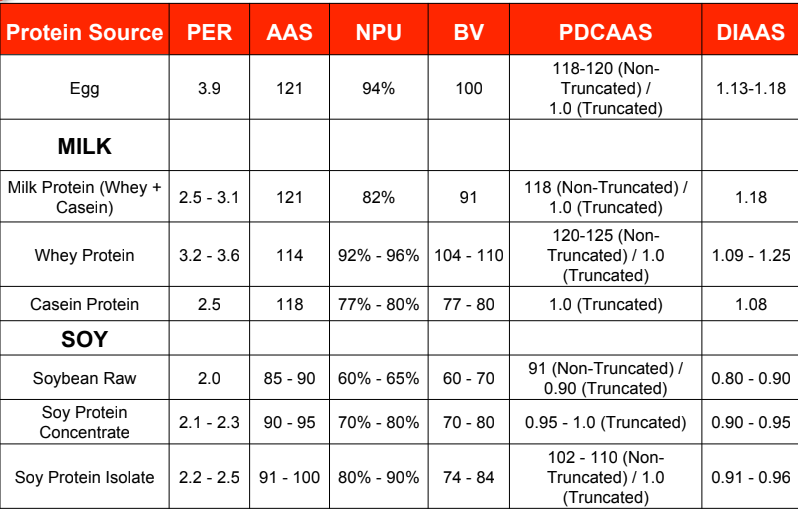
Higher values indicating better protein utilization (e.g., egg protein

~100).


2. Protein Efficiency Ratio 

The concept of Protein Efficiency Ratio

(PER) was introduced by Thomas Burr Osborne and Lafayette Mendel
in the year 1919.
The Protein Efficiency Ratio (PER) measures protein quality by
evaluating its ability to support growth in young rats. The test
involves feeding a diet containing the protein (typically 10%) for 28
days, recording weight gain, and calculating protein intake.

PER= Weight gain of test subject (g) X 100
                   Protein consumed (g)

A higher PER (e.g., >2.5 for casein or egg protein) indicates better
protein quality, while lower values suggest poor growth support.
However, PER only measures growth-related protein use, does not
consider digestibility, and may not fully apply to humans, making

PDCAAS or DIAAS more reliable measures of protein quality. 

3. Net Protein Utilization

 The concept of Net Protein Utilization was

introduced by Mitchell and Beadles in the year 1949.

Net Protein Utilization (NPU) measures how efficiently the body
absorbs and retains protein by comparing nitrogen retained to
nitrogen consumed. The test involves feeding a controlled diet,
measuring nitrogen intake and losses (fecal + urinary nitrogen),
and calculating NPU

NPU= Nitrogen retained X 100
              Nitrogen consumed

Higher NPU values indicate better protein quality (e.g., egg >70),
while lower values suggest poor utilization. However, NPU does
not account for amino acid composition and is less commonly
used today, with PDCAAS and DIAAS being more reliable methods

for assessing protein quality.

4. Amino Acid Score

 The concept of Amino Acid Score (AAS) was

introduced by the Food and Agriculture Organization (FAO) and the World
Health Organization (WHO) in the year 1973.

The Amino Acid Score (AAS) measures protein quality by comparing
its essential amino acid content to a standard reference protein. To
find AAS, the amino acid composition of the test protein is analyzed
and compared to the FAO/WHO/UNU reference values.

AAS= mg of essential amino acid in test protein X 100
           mg of essential amino acid in reference protein

The lowest value among all essential amino acids determines the
protein’s quality. A score of 100 or more means the protein is
complete, while a score below 100 indicates a deficiency in one or
more amino acids. However, AAS does not consider digestibility,
making PDCAAS or DIAAS a more accurate method for evaluating

protein quality.

5. Protein Digestibility Corrected Amino Acid Scores:

the concept of Protein Digestibility Corrected Amino Acid Score (PDCAAS)
was introduced by the Food and Agriculture Organization (FAO) and the
World Health Organization (WHO) in the year 1989.

PDCAAS evaluates protein quality by measuring its essential
amino acid content and digestibility. First, the Amino Acid Score
(AAS) is calculated by comparing the limiting amino acid to a
reference protein. Then, True Digestibility (TD) is determined
through fecal nitrogen analysis.

PDCAAS= Amino Acid Score (AAS) X Digestibility Factor

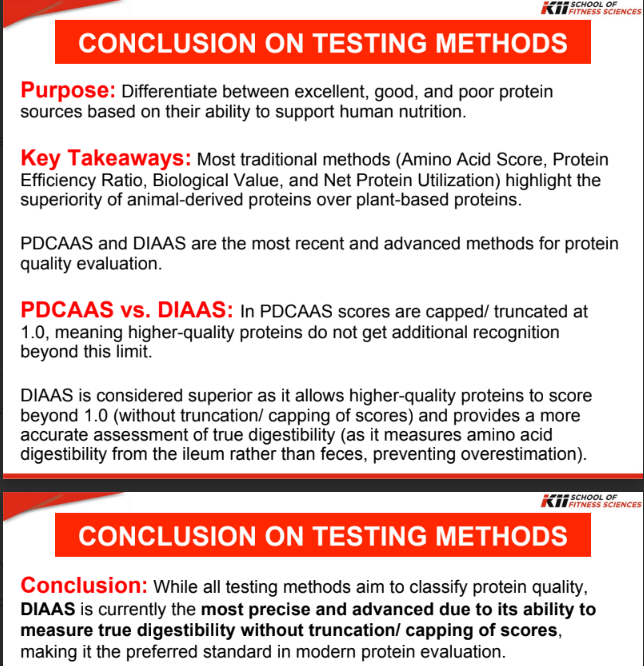
PDCAAS Values are capped at 1.0 (100%). Higher PDCAAS values
indicate better protein quality (e.g., egg, milk = 1.0), while lower
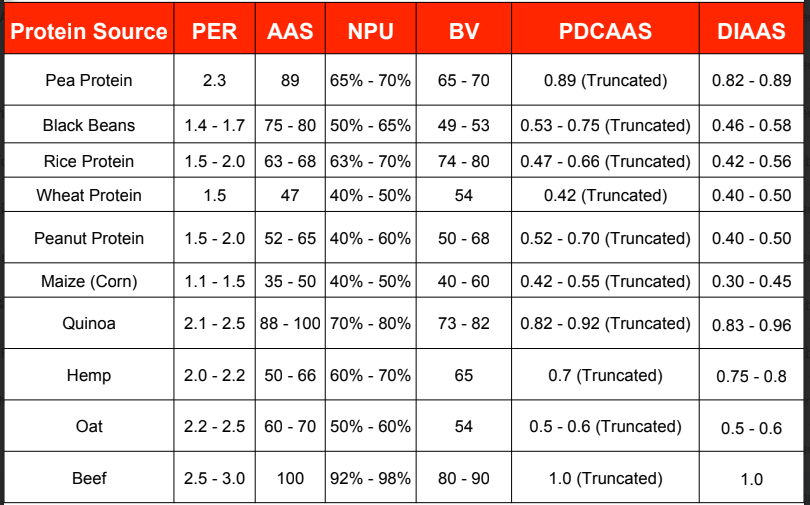
values suggest deficiencies (e.g., wheat = 0.4). However, PDCAAS

has limitations, leading to the DIAAS being preferred for accuracy.

6. Digestible Indispensable Amino Acid Scores


The concept of Digestible Indispensable Amino Acid Score (DIAAS) was introduced by
the Food and Agriculture Organization (FAO) in the year 2013.
DIAAS evaluates protein quality by measuring the ileal digestibility
of each essential amino acid rather than total fecal digestibility (as
in PDCAAS). The test involves analyzing the amino acid
composition of a protein, conducting ileal digestibility studies in
animals or humans, and calculating DIAAS.

DIAAS Formula=
mg of digestible essential amino acid in test protein X 100
mg of digestible essential amino acid in reference protein

Higher DIAAS values (>100%) indicate superior protein quality
(e.g., whey, milk), while lower values (<75%) suggest incomplete
proteins. DIAAS is considered more accurate than PDCAAS and is

the preferred method by FAO for assessing protein quality.

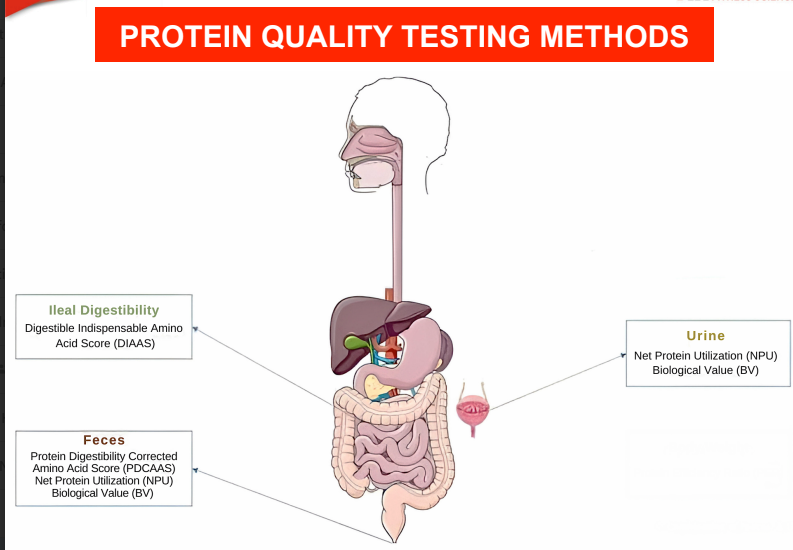
Methods without Sample collection:

Amino Acid Score (AAS): Compares essential amino acids in a protein to
a reference protein.

Protein Efficiency Ratio (PER): Assesses weight gain relative to protein
intake.

Methods with Sample collection:

Biological Value (BV) & Net Protein Utilization (NPU): Require urine and
fecal samples to measure nitrogen retention and utilization.

Protein Digestibility-Corrected Amino Acid Score (PDCAAS): Uses
fecal samples to determine digestibility.

Digestible Indispensable Amino Acid Score (DIAAS): Uses ileal samples
for more accurate digestibility assessment, avoiding overestimation from

fecal analysis.

Protein Source


PROTEIN SUPPLEMENT CATEGORIES


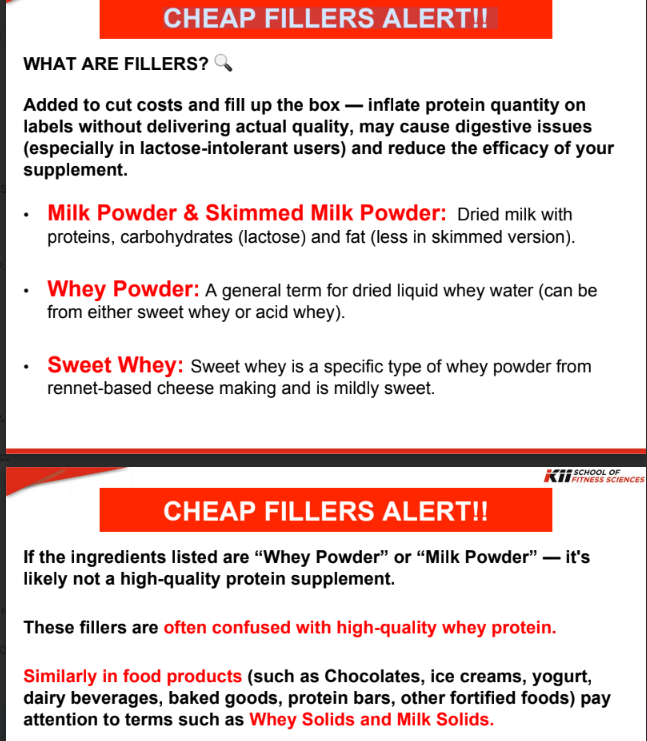
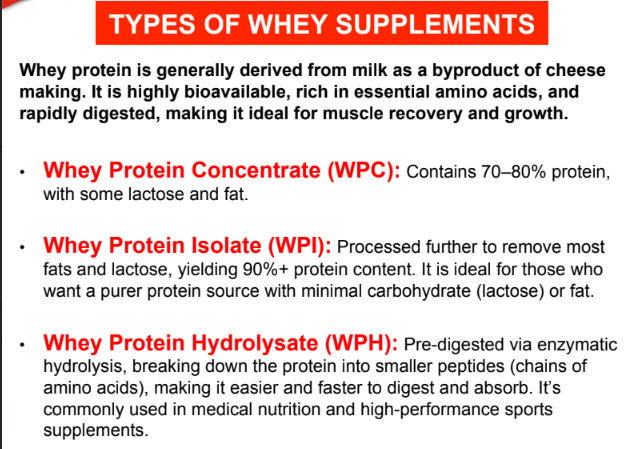
 1. Standalone Whey Protein Supplement: Whey Protein Concentrate

(WPC), Whey Protein Isolate (WPI), Whey Protein Hydrolysate (WPH)

2. Standalone Casein Supplements: Micellar Casein, Calcium
Caseinate, Casein Hydrolysate

3. Milk Protein Concentrate (MPC) and Milk Protein Isolate (MPI)

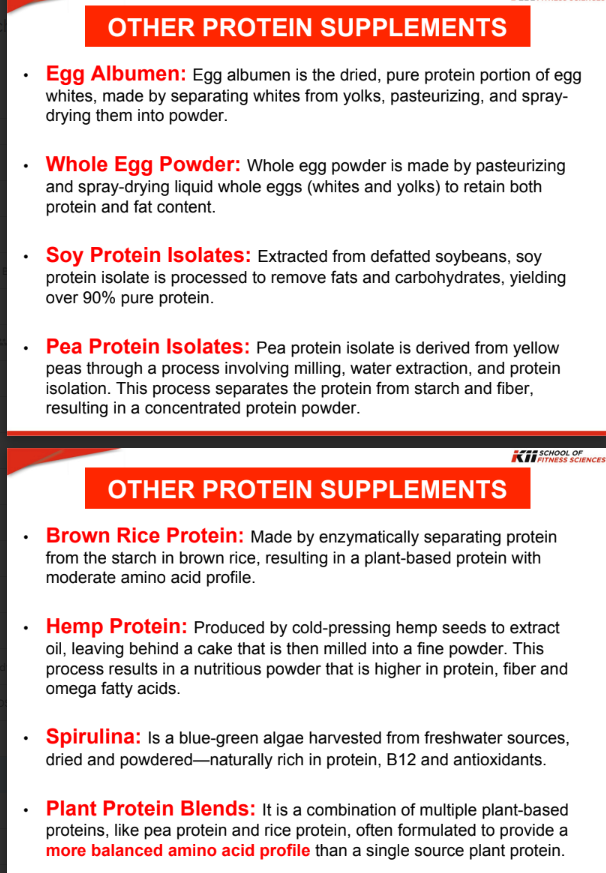
4. Egg Albumen Powder

5. Whole Egg Powder

6. Plant Proteins: Soy Protein Isolate (SPI), Pea Protein Isolate, Brown
Rice Isolate, Hemp Protein Isolate, Spirulina etc.

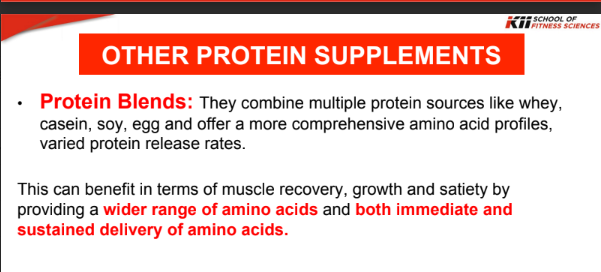
7. Whey Blends, Plant Protein Blends and Protein Blends


TYPES OF CASEIN SUPPLEMENTS

1. Micellar Casein 

: The natural, undenatured form of casein protein

found in milk. Composed of micelles (spherical structures) that form a gel

in the stomach, leading to slow digestion and a gradual/ sustained

release of amino acids. Generally used as a Night-time Protein (before

bed) or In-Between Meals (for satiety).


2. Calcium/ Sodium Caseinate

: Casein that has been treated with

calcium or sodium to form a soluble salt. More processed than Micellar

Casein and is often used in foods, shakes, and supplements because it

mixes well. It is digested faster than Micellar Casein.


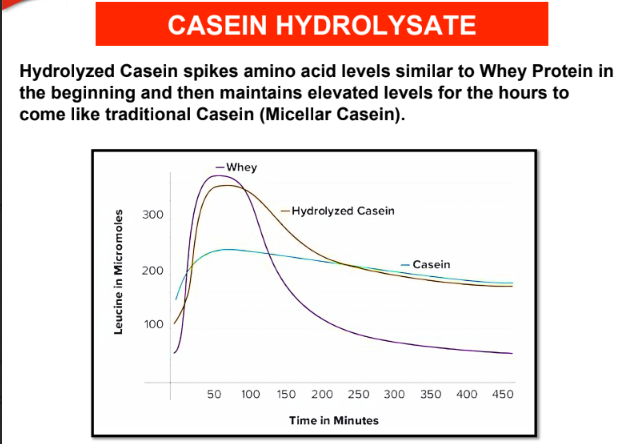
3. Casein Hydrolysate

: Pre-digested casein, also known as casein

hydrolysate, is a form of casein protein that has been broken down into

smaller peptides (chains of amino acids) through a process called

hydrolysis. It is the fastest digesting form of casein.


FILTRATION TECHNIQUES

Microfiltration (MF)
 It is a membrane filtration process used to
separate components of a liquid based on their molecular size.
Microfiltration membranes have pores typically ranging from 0.1 to 10
micrometers (microns). In the context of separating casein and whey
proteins, membranes with pore sizes around 0.1-0.2 microns are used.

2. Ultrafiltration (UF)
It is a membrane filtration process used to
separate components of a liquid based on their molecular size. The
membranes used in UF have pore sizes in the range of 0.01 to 0.1
microns. This is smaller than microfiltration membranes.

3. Dead-End Filtration 
It is a membrane filtration method where
liquid flows directly into the membrane, causing solids to accumulate
and clog the surface. This method is often used in simpler, smaller-scale

systems like laboratory applications or for initial filtration stages.

4. Cross-Flow Filtration (CFF)
It is also known as Tangential-
Flow Filtration (TFF), is a separation process where liquid flows

parallel to a membrane, allowing smaller components like water and
lactose (permeate) to pass through while larger components like whey
proteins (retentate) are retained. This method is preferred for large-scale
protein processing due to its ability to minimize clogging and fouling,
unlike dead-end filtration, which involves liquid flowing directly across the
membrane, potentially leading to solids accumulation.

5. Ion Exchange Chromatography (IEX) 
It is a protein
purification technique that separates molecules based on their
charge. It involves using a resin with charged groups that bind to
proteins with opposite charges. By controlling the pH and salt
concentration, specific proteins can be captured or released, allowing for

highly purified whey protein isolates.

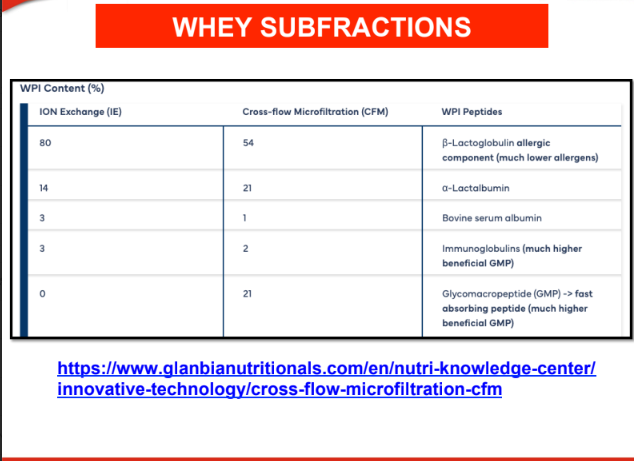
WHEY SUBFRACTIONS


Whey protein is not a single protein but a complex mixture of several
bioactive subfractions, each with distinct nutritional and functional roles.

1.Beta-lactoglobulin (β-LG) 

It is the most abundant protein in whey, crucial for muscle growth and recovery, but it's also a common allergen for some.

2. Alpha-lactalbumin (α-LA)

Rich in essential amino acids, important for  immune support and infant nutrition.

3. Immunoglobulins (IgG, IgA, IgM):

Antibodies that support immune function.

4. Lactoferrin: 

An iron-binding protein with antimicrobial and anti-inflammatory properties.

5. Glycomacropeptides (GMP) 

Bioactive peptides involved in gut health and calcium absorption.

• Other minor proteins: Such as serum albumin and enzymes.


Anti-Nutrients in Soy


Trypsin Inhibitors- reduce protein digestibility

Lectins- Can disrupts carbs digestion, binds to the intestinal linin, affecting nutrients

Phytates (Phytic Acid)- Bind to mineral like calcium, iron, zinc reducing their absorption (spinach tomato seeds)

Tannins- Decreases protein digestibility tea

Saponins- Bitter taste, can reduce nutrient availability

Oligosaccharides- causes digestive discomfort (eg, Raffinose, Stachyose)